28th April 2026
What’s lurking beneath the surface of your website?

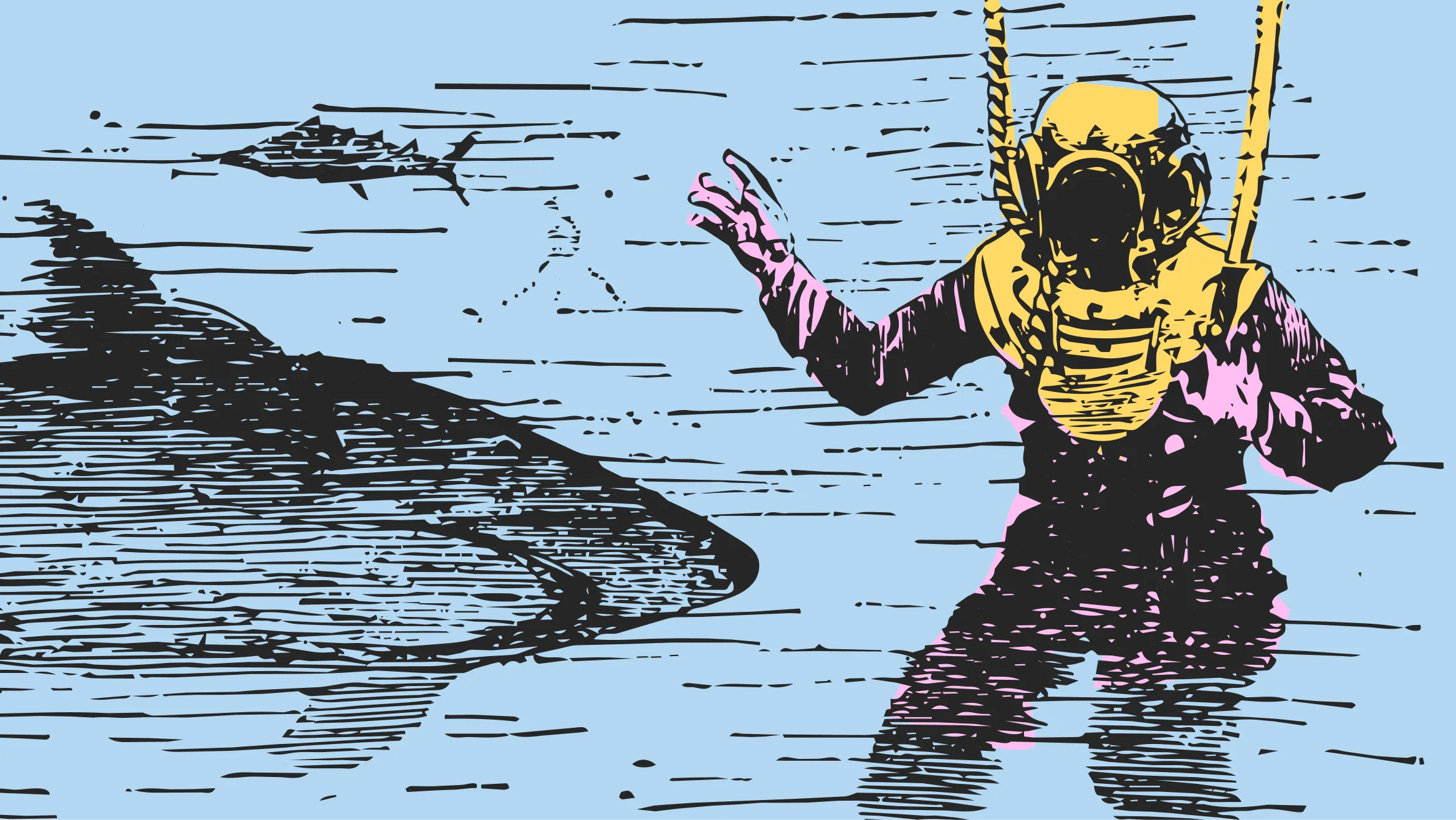
Your site may look calm on the surface, but hidden risks can build quietly until they become impossible to ignore.
There’s no sudden outage. No obvious warning. No clear moment where everything changes. On the surface, the site continues to work. Your WordPress dashboard looks as it always does. Pages load, content gets published, and campaigns go live. Which creates a natural assumption that everything is fine.
Which should feel reassuring, right? But often, it doesn’t.
Because in the back of your mind, there’s still a question: Is it actually under control?
You may find yourself hoping it is, crossing your fingers that nothing surfaces. And that’s exactly where the risk sits.
Because in reality, risk is often building quietly underneath. And at the same time, you’re the one responsible for a website that appears stable on the surface, without always having full visibility of what’s happening underneath.
The tricky part is, not only do you not realise risk building as it’s happening, but when something does go wrong, you’re expected to explain it.
In this article, we’ll cover:
- Risk builds quietly. You’re still expected to stay in control.
- Serious issues rarely happen suddenly. You’re expected to explain how they did.
- The cost of discovering problems late
- Why early awareness matters more than fast reaction
Risk builds quietly. You’re still expected to stay in control.
Website risk doesn’t appear on a random Monday morning. It accumulates over time.
A plugin update gets delayed, a dependency becomes outdated, a small workaround gets introduced to fix a short-term issue, or a piece of content is added without full governance.
Individually, none of these feel very significant. But together, they start to create instability.
You may notice security gaps begin to open, performance becomes inconsistent, or WordPress integrations stop behaving as expected.
And because everything still appears to be working, these issues don’t get prioritised. They sit quietly in the background, building.
You’re then left making decisions based on assumption, not certainty. And over time, that’s when risk becomes harder to manage.
Serious issues rarely happen suddenly. You’re expected to explain how they did.
When something does eventually go wrong, it can often feel quite unexpected. Perhaps a form stops working, a key journey breaks, or a compliance issue is flagged.
From the outside, it looks like a sudden problem. But in most cases the conditions for that issue have been forming for months.
The difference is that they’ve only just become visible.
It’s then that internal pressure begins to intensify. The conversation quickly shifts towards you, asking “what happened?” or “why didn’t we know about this sooner?” and more importantly “how did we let this happen?”
But in reality, there was no clear moment to catch it.
Website risk doesn’t announce itself straight away, creating any urgency when it’s still manageable.
Instead it accumulates until the impact is harder, more urgent and more visible to others.
By that point, you’re already on the back foot.
The cost of discovering problems late.
By the time a problem is obvious, its impact has already spread.
Internally, teams are pulled into urgent meetings and priorities shift to fixing the issues.
Externally, the consequences can be more serious with user journeys breaking, causing trust to be affected, which sees a dip in performance and conversions.
Alongside that, confidence starts to drop. Not just in the platform, but in the decisions of those responsible for it.
That’s when the idea of a rebuild can reappear. Not because it’s necessarily the right decision. But because it feels like the only way to regain control. Especially when the WordPress setup itself starts to feel unclear or difficult to trust.
Why early awareness matters more than fast reaction.
Most organisations focus on how quickly they can respond when something goes wrong.
But speed of reaction isn’t what creates confidence. Visibility is.
Understanding how the site is performing, knowing where risks exist, and being aware of how changes are affecting the WordPress site over time.
That’s what allows issues to be addressed early.
Before they escalate, become visible, and turn into something that needs explaining.
When you have that level of visibility, problems feel managed and under control. You’re not second guessing or reacting under pressure. You’re in a position to lead rather than defend.
Final thoughts.
Website risk isn’t about what’s visibly broken. It’s defined by what’s quietly building in the background.
The organisations that feel confident in their websites aren’t the ones who avoid problems entirely.
They’re the ones who can see them early. Who understand how risk accumulates. And who aren’t left explaining issues they never had visibility on in the first place.
Learn more about our services talked about in this post.